
Home / Research Articles / DSIP: Mechanism, Research, and Applications
DSIP: Mechanism, Research, and Applications
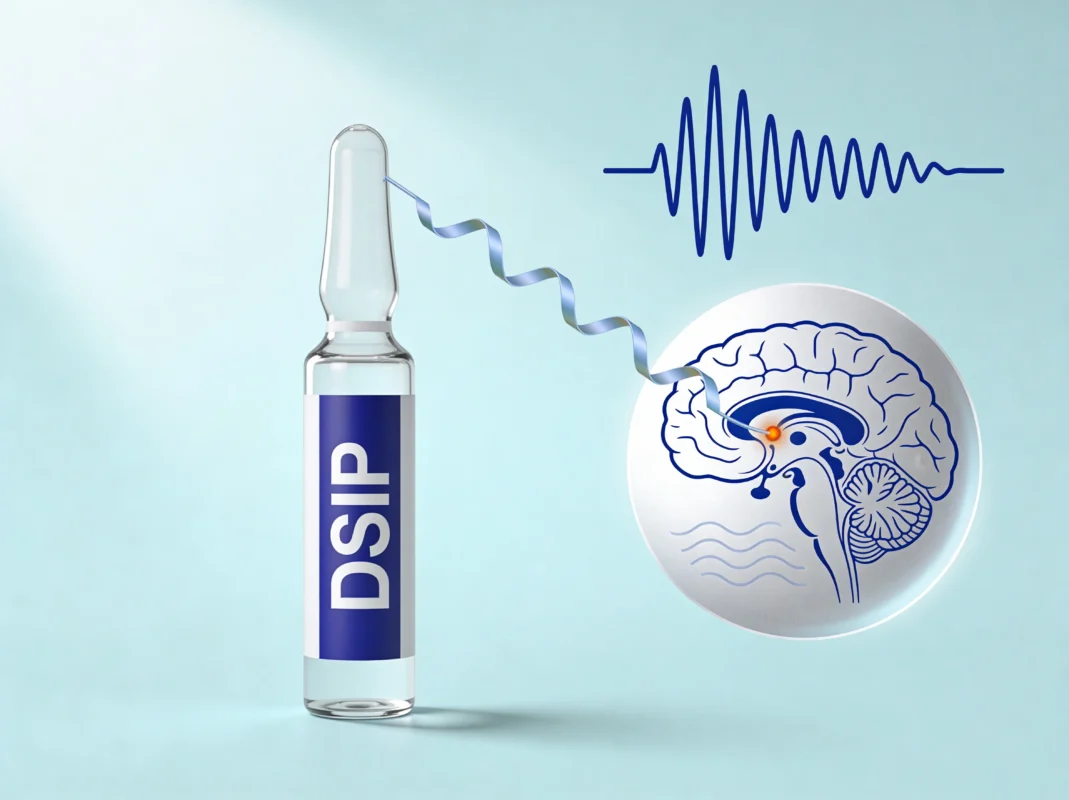
Key Takeaways
- DSIP (Delta Sleep-Inducing Peptide) is a 9-amino-acid peptide originally isolated from rabbit brain dialysate in 1977 by Schoenenberger and Monnier at the University of Basel.
- The mechanism is multi-target across CNS systems including sleep architecture modulation, HPA axis effects, analgesic activity, and anticonvulsant effects without single-receptor specificity.
- DSIP increases delta-wave (slow-wave) sleep activity in EEG measurements, with effects characterized in animal models and limited human clinical research over the decades.
- Research applications span sleep research, stress and HPA axis research, analgesia research, anticonvulsant research, and broader CNS-active peptide research domains.
- The molecular weight is ~849 g/mol; research-grade DSIP is intended for laboratory research only and is not approved by FDA, Health Canada, or any Western regulatory agency.
DSIP — Delta Sleep-Inducing Peptide — opens a new territory in the Kinetic Compounds research library: sleep-related research peptides. The compound has been studied across five decades since its 1977 isolation, with research applications that extend substantially beyond the sleep-inducing effects that gave the peptide its name. Modern DSIP research literature spans sleep architecture, stress and HPA axis modulation, analgesia and opioid interactions, anticonvulsant effects, and broader central nervous system applications.
This article addresses DSIP as a research compound, covering its structural origins, the multi-target mechanism that distinguishes it from receptor-canonical compounds, the research applications across multiple CNS domains, and the reconstitution and sourcing considerations researchers should understand before working with the compound.
What Is DSIP?
DSIP is a nonapeptide — a chain of nine amino acids — with the sequence Trp-Ala-Gly-Gly-Asp-Ala-Ser-Gly-Glu. The molecular weight is approximately 849 g/mol, and the CAS registry number is 62568-57-4.
The peptide was originally isolated by Schoenenberger, Monnier, and colleagues in 1977 through a remarkable series of experiments at the University of Basel in Switzerland [Ref. 1]. The research group electrically stimulated the thalamus of rabbits to induce sleep-like states, then collected cerebral venous blood and isolated the substance responsible for transferring sleep induction to recipient rabbits. The active component was characterized and named Delta Sleep-Inducing Peptide based on its capacity to induce delta-wave (slow-wave) sleep activity in the EEG of recipient animals.
The structural simplicity of DSIP — only nine amino acids, no unusual residues, no covalent modifications — distinguishes it from many modern synthetic research peptides. It is essentially a small natural peptide that has been synthesized and studied as a research compound, rather than a designed analog of a larger natural molecule. This structural simplicity has both advantages (synthesis is straightforward, stability is reasonable, mass spectrometry verification is unambiguous) and limitations (the compound is rapidly degraded by peptidases in circulation, with a short systemic half-life).
DSIP has not been approved by FDA, Health Canada, EMA, MHRA, or any other regulatory agency for human therapeutic use. Despite the decades of research interest and the documented effects across multiple CNS domains, the compound has not advanced to clinical approval anywhere in the world. Research-grade DSIP sold for laboratory research is intended exclusively for that purpose.
Mechanism of Action
DSIP’s mechanism is multi-target rather than receptor-canonical. Unlike compounds with clearly identified primary receptors (GLP-1 receptor agonists, GHRH analogs, opioid receptor agonists, and so on), DSIP modulates multiple neurotransmitter and hormonal systems through pathways that have been only partially characterized in the published literature.
The mechanistic literature on DSIP converges on several pathways operating in combination.
Sleep architecture modulation. The namesake application. DSIP increases delta-wave (slow-wave) sleep activity in EEG measurements in animal models, with similar but less robust effects documented in human clinical research. The mechanism appears to involve modulation of GABAergic and adenosinergic signaling in sleep-regulatory brain regions, though no single receptor has been definitively identified as the primary DSIP target [Ref. 3].
HPA axis and stress hormone modulation. DSIP has documented effects on the hypothalamic-pituitary-adrenal (HPA) axis, with reductions in stress-induced cortisol (in humans) and corticosterone (in rodents) elevation across multiple research models. The compound modulates corticotropin-releasing hormone (CRH) and adrenocorticotropic hormone (ACTH) secretion, contributing to its stress-buffering profile [Ref. 2].
Analgesia and opioid system modulation. A substantial line of DSIP research has examined analgesic effects and interactions with the endogenous opioid system. DSIP appears to potentiate the analgesic effects of opioids in some research models and may modulate withdrawal-related symptoms in opioid dependence research paradigms [Ref. 4].
Anticonvulsant effects. Animal model research has documented DSIP effects on seizure susceptibility and severity in various induced-seizure paradigms. The mechanism is multi-factorial and overlaps with the broader GABAergic and stress-axis modulation [Ref. 5].
Neuroprotection and antioxidant effects. Research has examined DSIP effects on neuronal survival, oxidative stress markers, and broader neuroprotective endpoints in various challenge models.
The multi-target mechanism means DSIP effects in research models depend significantly on protocol design and model choice. The compound’s effects are best understood as modulating multiple CNS pathways simultaneously rather than acting through a single dominant target.
Research Applications
DSIP research clusters into several primary domains, with the literature broader than the “sleep peptide” name suggests.
Sleep architecture research
The original research application. Animal model studies have examined DSIP effects on sleep EEG patterns, particularly slow-wave (delta) sleep activity, sleep latency, and sleep continuity. Effects have been documented across multiple species and protocol designs, with the most consistent findings being increases in delta sleep activity at moderate dose ranges [Ref. 1, Ref. 3]. Clinical research in humans has produced more variable results — some studies show increases in slow-wave sleep, others show minimal effects — likely reflecting differences in dosing, administration route, and study population.
Stress response and HPA axis research
The largest body of modern DSIP clinical research has examined effects on stress hormone secretion and stress-related symptoms. Studies in occupational stress populations, post-traumatic stress contexts, and induced-stress experimental designs have documented DSIP’s stress-buffering effects with relatively consistent findings across protocols [Ref. 2]. The HPA axis modulation has positioned DSIP for research applications spanning anxiety, depression, and stress-related conditions.
Analgesia and pain research
DSIP’s interactions with the endogenous opioid system have positioned the compound for analgesia research, including studies of postoperative pain, chronic pain conditions, and opioid potentiation. The compound is generally not active as a standalone analgesic at typical research doses but appears to potentiate opioid analgesia in combination protocols [Ref. 4].
Opioid dependence and withdrawal research
A specific line of DSIP research has examined effects on opioid withdrawal symptoms and dependence-related behavioral and physiological endpoints. The research base in this domain is smaller than the stress or sleep literature but is consistent in suggesting DSIP modulates aspects of the withdrawal process [Ref. 4].
Seizure protection and anticonvulsant research
Animal model research has documented DSIP effects across multiple induced-seizure paradigms, including chemical convulsant models and electrical stimulation models. The anticonvulsant effects are mechanistically multi-factorial but consistent enough to support ongoing research interest in this domain [Ref. 5].
Comparative neuropeptide research
Researchers studying CNS-active peptides commonly compare DSIP with other neuropeptides covered in this research library, including Selank (anxiolytic mechanisms) and Semax (nootropic mechanisms). The compounds operate through distinct mechanisms but address overlapping research domains in stress and CNS function.
Across all research domains, DSIP is intended for laboratory research only in the Kinetic Compounds context. The compound has not been evaluated by FDA, Health Canada, or any other Western regulatory agency for human therapeutic use.
Dosing & Reconstitution for Research
Researchers working with lyophilized DSIP reconstitute the compound with bacteriostatic water before use. The basic reconstitution math follows the standard concentration-equals-mass-divided-by-volume principle covered in our reconstitution tutorial.
A 5 mg vial of DSIP reconstituted with 2 mL of bacteriostatic water yields 2.5 mg/mL. A 10 mg vial in 2 mL yields 5 mg/mL. DSIP’s molecular weight (~849 g/mol) places it in the small-peptide range similar to Selank and Semax — molar concentrations are high per mg compared to larger peptides like the GH peptides or GLP-1s.
A consideration specific to DSIP: the compound has a relatively short systemic half-life due to rapid peptidase degradation in plasma. Research protocols designed to maintain DSIP exposure over extended windows typically use frequent administration or sustained-release formulation approaches; protocols designed to study acute effects use single-administration designs that align with the short pharmacokinetic profile.
Researchers can verify their concentration math against our peptide reconstitution calculator, which handles the conversion automatically.
This article does not provide dosing guidance for any therapeutic purpose. DSIP is not approved for human therapeutic use.
Storage & Handling
Lyophilized DSIP is stable at room temperature during shipping but should be moved to long-term storage at -20°C (-4°F), protected from light, on receipt. Under proper lyophilized conditions, the compound remains stable for 24 months or longer.
Once reconstituted, DSIP should be stored at 2–8°C and used within 28 days. The general storage principles for research peptides apply directly — see our storage and stability guide for detailed protocols including freeze-thaw considerations and aliquoting strategies.
Every vial should be visually inspected before use. The reconstituted solution should be clear and free of particulates. Cloudiness, discoloration, or visible sediment indicates degradation, and the vial should not be used in research.
For full handling protocols across the broader peptide catalog, see our storage and reconstitution guide.
Sourcing Verified DSIP for Research
DSIP’s small size (~849 Da) makes mass spectrometry verification straightforward — the molecular weight is small enough to be measured with high accuracy on standard analytical equipment, and the compound’s nine-amino-acid sequence is distinctive enough that mislabeling within the small-peptide research class is easy to detect with proper testing.
A credible Certificate of Analysis for DSIP should show HPLC purity expressed as a percentage, mass spectrometry confirmation matching ~849 Da, and a clear distinction between peptide content and peptide mass. The principles of reading a research peptide COA are covered in detail in our reading a Certificate of Analysis article, and our specific third-party testing methodology is documented in our Janoshik Analytical methodology article.
Kinetic Compounds tests every batch of DSIP through Janoshik Analytical, an independent third-party laboratory. Current batch reports are published on the DSIP product page. Our broader testing methodology is documented on our lab testing and COA page.
For researchers working across CNS-active research peptides, Selank and Semax are mechanistically distinct but research-adjacent compounds in the Kinetic Compounds catalog. The full research peptide catalog is available through our shop.
Researching sleep, stress, and CNS-active peptides? Our complete research peptide catalog covers DSIP, Selank, Semax, and related compounds — all independently lab-tested with current Certificates of Analysis available on each product page.
Related Peptides
Related peptides will load here via PHP snippet.
Available for Research
Research Tools
Quality Promise
very batch independently tested by Janoshik Analytical. 98% purity minimum.
Frequently Asked Questions
What is DSIP?
<p>DSIP (Delta Sleep-Inducing Peptide) is a nonapeptide originally isolated by Schoenenberger and Monnier in 1977 from rabbit brain dialysate following electrical stimulation of the thalamus. The compound was named for its sleep-inducing effects but has subsequently been studied across stress response, analgesia, opioid modulation, and anticonvulsant research domains.</p>
Does DSIP actually induce sleep?
<p>DSIP increases delta-wave (slow-wave) sleep activity in EEG measurements in animal models, which is the basis for its name. Clinical research in humans has produced more variable results — some studies show increases in slow-wave sleep, others show minimal effects. The compound's research applications extend well beyond sleep into stress, analgesia, and broader CNS domains.</p>
What is DSIP studied for besides sleep?
<p>DSIP research domains include stress response and HPA axis modulation (the largest body of modern clinical research), analgesia and opioid interactions, opioid withdrawal research, anticonvulsant effects in animal seizure models, and broader neuroprotective applications. The "sleep peptide" name reflects the original discovery rather than the full research scope.</p>
Is DSIP approved as a medication?
<p>No. DSIP has not been approved by FDA, Health Canada, EMA, MHRA, or any other regulatory agency for human therapeutic use. Despite five decades of research interest and documented effects across multiple CNS domains, the compound has not advanced to clinical approval anywhere in the world. Research-grade DSIP is intended for laboratory research only.</p>
How is DSIP different from other CNS-active research peptides?
<p>DSIP, Selank, and Semax all act on multi-target CNS pathways rather than through single dominant receptors. DSIP's research emphasis is sleep architecture, stress, and analgesia; Selank's emphasis is anxiolytic and immunomodulatory; Semax's emphasis is nootropic and neuroprotective. The compounds address overlapping research domains through distinct mechanisms.</p>
How is DSIP reconstituted for research?
<p>Lyophilized DSIP is reconstituted with bacteriostatic water. A 5 mg vial in 2 mL yields 2.5 mg/mL. Standard peptide reconstitution technique applies — inject bacteriostatic water down the inner wall of the vial, swirl gently. Researchers can verify calculations using our reconstitution calculator.</p>
Is research-grade DSIP legal in Canada?
<p>Research-grade DSIP is legal to purchase and possess in Canada for laboratory research purposes only. The compound is not approved by Health Canada for human therapeutic use.</p>
References
- "Characterization of a delta-electroencephalogram (-sleep)-inducing peptide." Proceedings of the National Academy of Sciences of the United States of America, 74(3):1282-1286. — Schoenenberger GA, Monnier M (1977).
- "[Analysis of the mechanism of the stress-protective action of delta sleep-inducing peptide]." Biulleten' Eksperimental'noi Biologii i Meditsiny, 109(3):252-254. — Iukhananov RIu, Maĭskiĭ AI, Marsakova NV (1990).
- "The influence of synthetic DSIP (delta-sleep-inducing-peptide) on disturbed human sleep." Experientia, 37(8):913-917. — Schneider-Helmert D, Schoenenberger GA (1981).
- "Therapeutic effects of delta-sleep-inducing peptide (DSIP) in patients with chronic, pronounced pain episodes. A clinical pilot study." European Neurology, 23(5):372-385. — Larbig W, Gerber WD, Kluck M, Schoenenberger GA (1984).
- "The influence of the delta-sleep-inducing peptide on convulsive activity." Neuroscience and Behavioral Physiology, 23(3):199-204. — Shandra AA, Godlevsky LS, Brusentsov AI, Karpov OB (1993).
Continue Reading
For Research Use Only Products described on this site are intended for laboratory research purposes only. They are not approved by Health Canada for human consumption, diagnosis, treatment, or prevention of any medical condition.