
Home / Research Articles / ADA 86th Scientific Sessions 2026: What to Watch in Cardiometabolic Research
ADA 86th Scientific Sessions 2026: What to Watch in Cardiometabolic Research
Key Takeaways
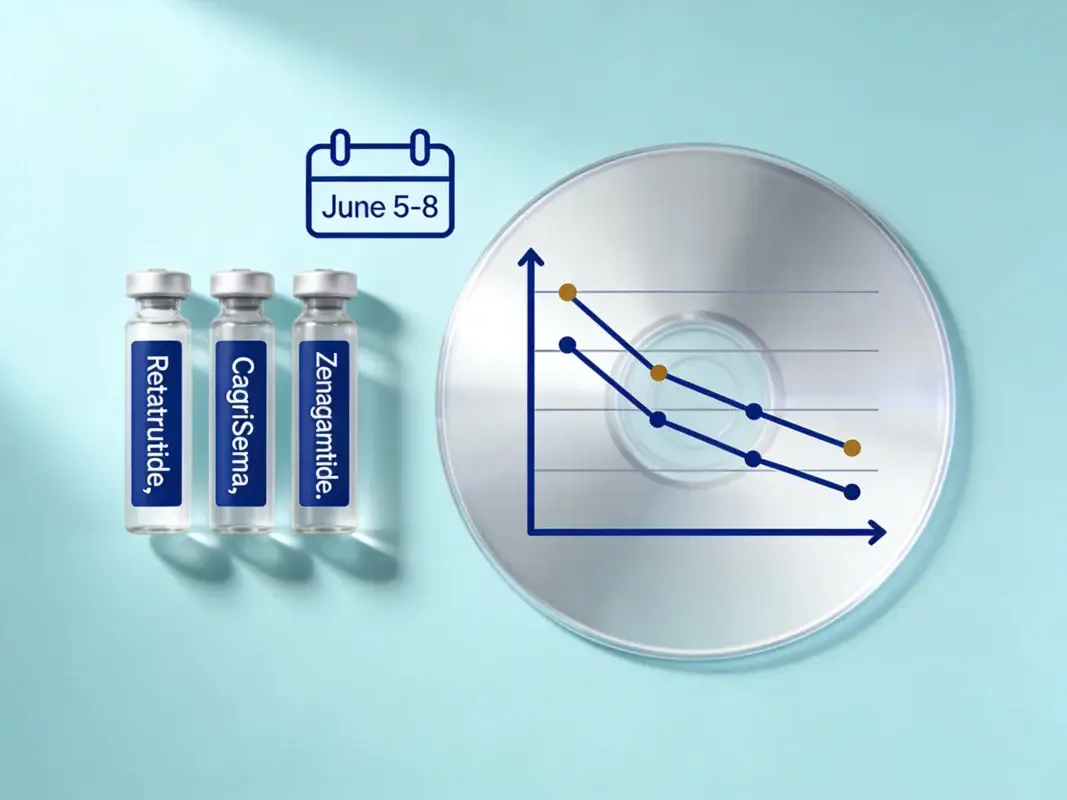
- The American Diabetes Association's 86th Scientific Sessions take place June 5-8, 2026 in New Orleans, Louisiana — the largest annual diabetes research conference and a major venue for cardiometabolic
- Eli Lilly will present detailed Phase 3 TRIUMPH-1 retatrutide data (topline results announced May 21, 2026 showed up to 30% body weight reduction in severe obesity) along with TRANSCEND-T2D-1 type 2 d
- Novo Nordisk will present Phase 3 REIMAGINE 1-3 results for CagriSema (cagrilintide-semaglutide combination) and Phase 2 data for zenagamtide (a novel GLP-1/amylin combination compound), along with ad
- The conference comes during a period when obesity therapeutics has displaced oncology as the largest area of pharmaceutical pipeline value, with IQVIA forecasting up to $200 billion in obesity medicat
- Several investigational compounds presented at the conference may eventually become available as research-grade material for laboratory research — though all currently remain investigational and unapp
The American Diabetes Association’s 86th Scientific Sessions take place June 5-8, 2026 in New Orleans — the largest annual diabetes research conference, and a major venue for cardiometabolic pipeline data releases. The 2026 edition follows what may be the most consequential six months in obesity therapeutics research in a decade, with detailed Phase 3 data from multiple investigational compounds reaching the conference podium alongside continuing analyses of approved GLP-1-class compounds.
This article previews what to watch at ADA 2026, with focus on the cardiometabolic pipeline presentations most relevant to the broader research understanding of GLP-1-class compounds and the next generation of obesity therapeutics. The article is a preview — the article will be updated with actual data outcomes after the conference concludes.
Why ADA 2026 Matters
Obesity therapeutics has become the most active and most commercially significant area of pharmaceutical development in 2026. Industry analyst IQVIA has forecast $92 billion in obesity medication sales for 2026 with potential growth to $200 billion by 2027 and beyond [Ref. 3]. Obesity displaced oncology as the largest area of pharmaceutical pipeline value in 2024, with weight-loss medications now accounting for 25% of overall pharma pipeline value across the industry [Ref. 3].
The ADA Scientific Sessions reflect this shift. Recent editions have featured heavy obesity-focused programming, and the 2026 edition continues that pattern with a “superstar lineup” of pharmaceutical and biotechnology companies presenting on both approved and investigational compounds [Ref. 3]. The conference is the most consequential venue for cardiometabolic pipeline data releases each year.
For researchers in the peptide research space, ADA 2026 matters because it provides the most current and most detailed picture of where cardiometabolic peptide research is heading. The investigational compounds presented at the conference are the compounds that will define the next several years of cardiometabolic research — both in the pharmaceutical product context and in the broader research literature that informs laboratory research applications.
Eli Lilly’s Presentations
Eli Lilly announced on May 28, 2026 that the company will present new data across its cardiometabolic portfolio at ADA 2026 — including pivotal Phase 3 results for retatrutide and the recently approved Foundayo (orforglipron) [Ref. 1]. Kenneth Custer, executive vice president and president of Lilly Cardiometabolic Health, characterized the presentations as part of the company’s effort to “lead the next era of cardiometabolic care, with a differentiated suite of approved and investigational medicines” [Ref. 1].
The most-anticipated Lilly presentation is detailed TRIUMPH-1 data. The topline results announced May 21, 2026 are covered in our Retatrutide TRIUMPH-1 Phase 3 results article — at 80 weeks, participants on retatrutide 12mg achieved an average 25.0% body weight reduction; a subgroup of 532 participants with severe obesity escalated to maximum tolerated dose for an additional 24 weeks reached up to 30% body weight reduction at 104 weeks. The ADA detailed presentation will include cardiometabolic endpoints, subgroup analyses, and additional safety detail beyond what the topline announcement provided.
Other Lilly cardiometabolic presentations include:
| Presentation | Compound | Trial / Endpoint |
|---|---|---|
| TRIUMPH-1 detailed results | Retatrutide | Phase 3 obesity, full data with cardiometabolic endpoints |
| TRANSCEND-T2D-1 data | Retatrutide | Phase 3 type 2 diabetes, A1C and weight outcomes |
| ACHIEVE program results | Foundayo (orforglipron) | Phase 3 type 2 diabetes, oral GLP-1 |
| Mounjaro/Zepbound (Tirzepatide) | Various | Continuing analyses of approved compound |
The Foundayo (orforglipron) data is notable because the compound is the first oral nonpeptide GLP-1 to reach approval, taken without food or water restrictions [Ref. 4]. The ACHIEVE program presentations will include head-to-head data versus oral semaglutide (ACHIEVE-3) and comparison with dapagliflozin (ACHIEVE-2).
Across the Lilly portfolio, the ADA presentations represent the most comprehensive data release on the company’s cardiometabolic pipeline in any single venue, with both approved-product expansion data and investigational-compound Phase 3 results sharing the conference stage.
Novo Nordisk’s Presentations
Novo Nordisk announced on May 27, 2026 that the company will present 40 abstracts across its cardiometabolic portfolio and pipeline at ADA 2026 [Ref. 2]. The headline presentations are Phase 3 REIMAGINE 1-3 results for CagriSema (the cagrilintide-semaglutide combination) and Phase 2 data for zenagamtide (an investigational once-weekly GLP-1/amylin combination compound).
Martin Lange, executive vice president of Research & Development and chief scientific officer at Novo Nordisk, characterized the presentations as “underscoring the breadth and strength of our approach to cardiometabolic diseases” with emphasis on “building on the established and unique profile of semaglutide” [Ref. 2].
Key Novo Nordisk presentations:
| Presentation | Compound | Trial / Endpoint |
|---|---|---|
| REIMAGINE 1-3 | CagriSema (cagrilintide + semaglutide) | Phase 3 type 2 diabetes, glycemic control and weight |
| Phase 2 zenagamtide | Zenagamtide | Novel GLP-1/amylin once-weekly investigational compound |
| Ozempic and Wegovy analyses | Semaglutide | Additional cardiometabolic and subgroup data |
CagriSema is Novo Nordisk’s next-generation obesity candidate — a fixed-dose combination of semaglutide and the long-acting amylin analog cagrilintide [Ref. 3]. Previous comparison trials showed CagriSema outperformed semaglutide monotherapy for glucose control and weight loss in type 2 diabetes patients but underperformed against tirzepatide for weight loss [Ref. 4]. The REIMAGINE 1-3 trials evaluate CagriSema as monotherapy in drug-naive type 2 diabetes (REIMAGINE-1), in comparison with semaglutide or cagrilintide alone in patients on metformin (REIMAGINE-2), and as add-on therapy with basal insulin (REIMAGINE-3) [Ref. 4]. The Phase 3 detailed data will determine where CagriSema fits in the broader cardiometabolic landscape.
The zenagamtide Phase 2 data represents Novo Nordisk’s push to build the next generation of obesity treatments beyond semaglutide [Ref. 4]. Amylin-based combination therapies are an active area of research across the industry, with multiple companies pursuing combinations of GLP-1 with amylin and other complementary mechanisms.
How TRIUMPH-1 Detailed Data Compares to Other Phase 3 Programs
The most-watched ADA 2026 presentation is the detailed TRIUMPH-1 retatrutide data. The topline numbers (covered in our TRIUMPH-1 results article) are striking, but the detailed data release at ADA will include several elements not yet public.
Cardiometabolic endpoints. Lead investigator Ania Jastreboff’s brief reference to “clear improvements in assessed cardiometabolic health measures” in the topline announcement is the most-anticipated single line of detailed data. Cardiovascular risk markers, glycemic control, lipid profile changes, blood pressure outcomes, and other cardiometabolic endpoints will inform the broader pharmacological evaluation of retatrutide beyond the headline weight loss numbers.
Subgroup analyses. TRIUMPH-1 enrolled 2,339 participants with substantial baseline heterogeneity. Subgroup analyses by baseline BMI, baseline comorbidities, baseline glycemic status, sex, age, and ethnicity will inform clinical decision-making and the broader research understanding of compound effects in different populations.
Detailed safety profile. Topline data identified the major adverse event categories — nausea, diarrhea, constipation, vomiting, dysesthesia, urinary tract infections — but detailed safety analyses including severity gradations, time-to-onset patterns, and recovery curves are anticipated in the detailed presentation.
Dose-response analyses. The relationship between dose escalation pace, maintenance dose, and weight outcomes will be characterized in detail — informing future protocol design across the broader Phase 3 program.
The detailed presentation also matters for cross-trial comparison. The comparison with Wegovy and Zepbound outlined in our TRIUMPH-1 article and our GLP-1 research comparison will become more precise once detailed TRIUMPH-1 data is available — though direct head-to-head trials (TRIUMPH-5 active comparator design) remain the most definitive comparative evidence pathway.
What the Broader Pipeline Looks Like
Beyond the Lilly and Novo Nordisk presentations, ADA 2026 will feature presentations from “plucky biotechs” presenting their own obesity candidates that may compete with the established players [Ref. 3]. The pipeline diversity reflects how attractive the obesity therapeutics space has become — with the dominant compounds producing exceptional outcomes but with substantial room for differentiation on tolerability, administration route, dose response, and specific patient populations.
Areas of pipeline activity worth tracking at ADA 2026 and beyond:
Triple-agonist compounds beyond retatrutide. The triple-agonist hypothesis (GIP + GLP-1 + glucagon receptor activation) is supported by the TRIUMPH-1 results, and multiple companies are pursuing triple-agonist development. Differentiation will come from receptor balance, tissue selectivity, and tolerability profiles.
GLP-1 + amylin combinations. Both Novo Nordisk’s CagriSema and zenagamtide reflect industry interest in amylin-based combination therapy. The Phase 3 CagriSema data will define the commercial and clinical viability of this approach.
Oral GLP-1 formulations. Foundayo (orforglipron) is the first oral nonpeptide GLP-1 to reach approval. The ADA presentations will include comparison data versus oral semaglutide and other comparators — defining the commercial positioning of oral options versus injectable products.
Maintenance dose optimization. Multiple Phase 3 programs are exploring the optimal balance between maximum weight loss outcomes and maintenance dose tolerability. TRIUMPH-1 explicitly tests a 4mg maintenance dose option that delivered 17.6% weight loss with placebo-comparable discontinuation rates — relevant for real-world treatment design.
Type 1 diabetes and MASLD applications. GLP-1-class compounds are being studied for indications beyond the foundational type 2 diabetes and obesity approvals. ADA 2026 will feature presentations on T1D applications and metabolic dysfunction-associated steatotic liver disease (MASLD) endpoints across multiple compounds.
What This Means for Research
The pharmaceutical pipeline presented at ADA 2026 informs the broader peptide research landscape in several ways relevant for researchers working with research-grade compounds.
Mechanism validation. The triple-agonist mechanism that retatrutide is built on has now received Phase 3 validation at scale. The mechanism understanding covered in our Retatrutide deep dive is supported by the most current Phase 3 evidence — useful context for any research using research-grade retatrutide.
Comparator landscape. The detailed Phase 3 data for retatrutide, CagriSema, and zenagamtide expands the comparative landscape for researchers studying GLP-1-class compounds. Our GLP-1 research comparison will be updated as the detailed data becomes available.
Pipeline visibility. Researchers interested in compounds that may eventually become available as research-grade material can use ADA presentations as visibility into the broader development pipeline. Many compounds presented at industry conferences eventually enter the research-grade compound supply chain as their development matures.
Regulatory framing remains unchanged. ADA presentations of clinical trial data do not change the regulatory status of investigational compounds. Retatrutide, CagriSema, zenagamtide, and other investigational compounds remain unapproved by FDA, Health Canada, EMA, and other regulatory agencies regardless of the strength of the Phase 3 data presented at the conference. Research-grade material continues to be intended for laboratory research only.
Sourcing Research-Grade Compounds
For researchers studying GLP-1-class compounds in laboratory contexts, Retatrutide, Semaglutide, and Tirzepatide are available through the Kinetic Compounds catalog with batch-specific Certificates of Analysis from Janoshik Analytical published on each product page.
The complete mechanism and research background for these compounds is covered in our individual deep dives: Semaglutide, Tirzepatide, and Retatrutide, with head-to-head comparison in our GLP-1 research comparison.
Research-grade material is intended exclusively for laboratory research and is not a substitute for any approved pharmaceutical product. The trial data presented at ADA 2026 does not change this framing — the pharmaceutical compounds and the research-grade compounds operate under different regulatory frameworks.
For deeper research background on the compounds presented at ADA 2026, see our Retatrutide deep dive, Semaglutide deep dive, Tirzepatide deep dive, and head-to-head GLP-1 research comparison. Research-grade material for laboratory research is available through our research peptide catalog with current Certificates of Analysis on every product page.
Available for Research
Research Tools
Quality Promise
very batch independently tested by Janoshik Analytical. 98% purity minimum.
Frequently Asked Questions
When and where is the ADA 86th Scientific Sessions?
<p>The conference takes place June 5-8, 2026 at the Ernest N. Morial Convention Center in New Orleans, Louisiana. It is the largest annual diabetes research conference and a major venue for cardiometabolic pipeline data releases each year.</p>
What is the most-anticipated presentation at ADA 2026?
<p>Detailed Phase 3 TRIUMPH-1 retatrutide data is widely considered the most-anticipated single presentation at the conference. The topline results announced May 21, 2026 showed up to 30% body weight reduction in severe obesity — the detailed data will include cardiometabolic endpoints, subgroup analyses, and detailed safety profile beyond the topline.</p>
What is CagriSema?
<p>CagriSema is Novo Nordisk's investigational fixed-dose combination of semaglutide and cagrilintide, a long-acting amylin analog. Phase 3 REIMAGINE 1-3 trial results will be presented at ADA 2026, evaluating CagriSema in different type 2 diabetes patient populations.</p>
What is zenagamtide?
<p>Zenagamtide is a novel investigational once-weekly injectable GLP-1/amylin combination compound being developed by Novo Nordisk. Phase 2 data will be presented at ADA 2026, representing part of the company's effort to build the next generation of obesity treatments beyond semaglutide.</p>
What is Foundayo?
<p>Foundayo (orforglipron) is Eli Lilly's recently approved oral nonpeptide GLP-1 medication for weight management. It is the first oral GLP-1 that can be taken without food or water restrictions, distinguishing it from oral semaglutide. ADA 2026 will feature ACHIEVE trial data including head-to-head comparison with oral semaglutide.</p>
Are any of these compounds available as research-grade material?
<p>Some compounds presented at ADA 2026 are available as research-grade material from Kinetic Compounds for laboratory research only — including Retatrutide, Semaglutide, and Tirzepatide. Newer investigational compounds presented at the conference (CagriSema, zenagamtide) are not currently available as research-grade material as their development is still in earlier stages.</p>
Does ADA 2026 trial data change the regulatory status of any compounds?
<p>No. The trial data presented at scientific conferences informs the broader research understanding but does not change regulatory status. Retatrutide, CagriSema, zenagamtide, and other investigational compounds remain unapproved by FDA, Health Canada, EMA, and other regulatory agencies regardless of the strength of conference-presented data. Regulatory approval requires formal submission, review, and approval processes that take place after Phase 3 trials conclude.</p>
References
- "Lilly to present new data on Foundayo, Mounjaro and retatrutide at the American Diabetes Association's 86th Scientific Sessions." Eli Lilly and Company press release. — Eli Lilly and Company (May 28, 2026).
- "Novo Nordisk advances cardiometabolic pipeline with new data featuring CagriSema and zenagamtide at the American Diabetes Association's 2026 Scientific Sessions." Novo Nordisk press release. — Novo Nordisk (May 27, 2026).
- "Obesity Davids and Goliaths face off at ADA 2026." BioSpace. — BioSpace (May 30, 2026).
- "The Latest in GLP-1-Based Therapy to be Featured at ADA." Medscape Medical News. — Medscape (May 31, 2026).
Continue Reading
For Research Use Only Products described on this site are intended for laboratory research purposes only. They are not approved by Health Canada for human consumption, diagnosis, treatment, or prevention of any medical condition.