
Home / Research Articles / PT-141 (Bremelanotide): Mechanism, Research, and Applications
PT-141 (Bremelanotide): Mechanism, Research, and Applications
Key Takeaways
- PT-141 (bremelanotide) is a synthetic 7-amino-acid cyclic peptide analog of α-melanocyte-stimulating hormone (α-MSH) developed by Palatin Technologies for sexual function research.
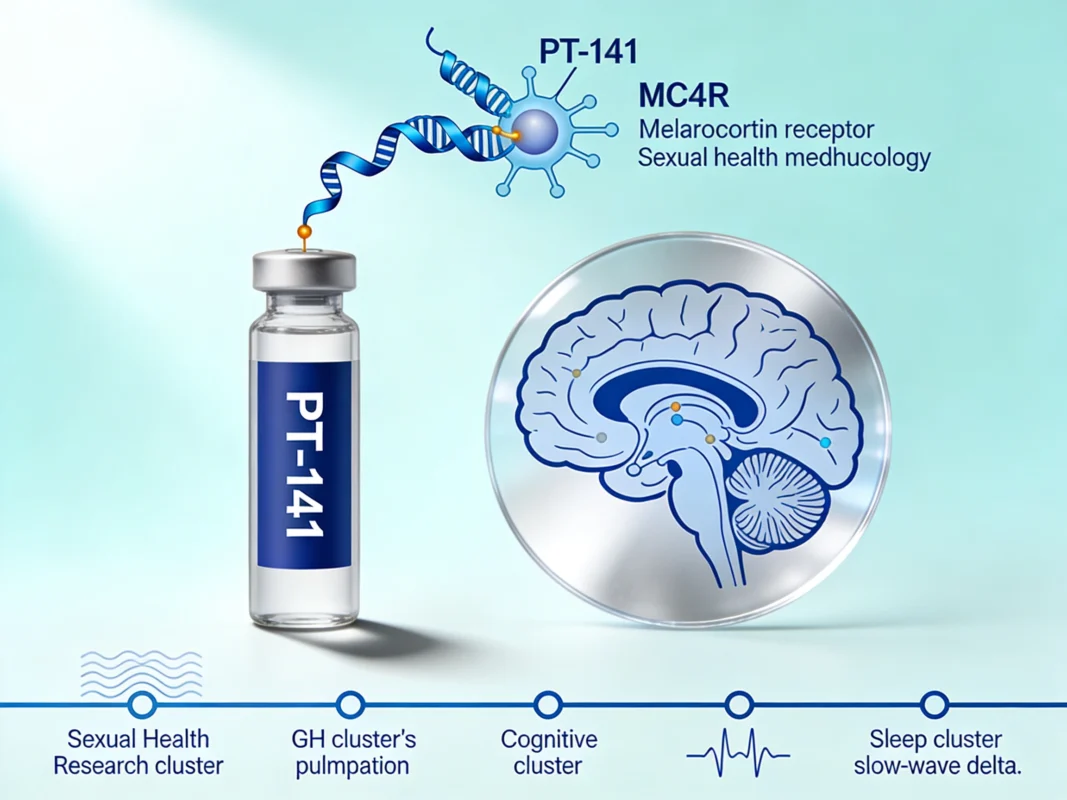
- The compound acts through central melanocortin receptors (MC4R, MC3R) in the hypothalamus and limbic system — fundamentally different from peripheral-acting PDE5 inhibitors.
- The earlier development program included erectile dysfunction research, but the ED pathway did not result in approval due to cardiovascular safety findings during clinical trials.
- The earlier development program included erectile dysfunction research, but the ED pathway did not result in approval due to cardiovascular safety findings during clinical trials.
- The molecular weight is ~1,025 g/mol; research-grade PT-141 is distinct from the approved Vyleesi pharmaceutical product and intended for laboratory research only.
PT-141 opens an entirely new research conversation in the Kinetic Compounds Research Library: sexual health peptide research. Unlike every other compound covered in the library to date — healing peptides like BPC-157, metabolic compounds like the GLP-1 receptor agonists, growth hormone modulators like the GHRH analogs, cognitive peptides like Selank and Semax, or mitochondrial-derived peptides like MOTS-c — PT-141 addresses a research domain centered on central nervous system melanocortin signaling and sexual function pathways. The compound is also notable for having achieved FDA pharmaceutical approval (as Vyleesi, 2019) for a specific indication, distinguishing it from the majority of research peptides that remain investigational.
This article addresses PT-141 (bremelanotide) as a research compound — its structural origin as a synthetic α-MSH analog, the central melanocortin receptor mechanism that distinguishes it from peripheral-acting sexual health pharmacology, the research applications across sexual function research and broader melanocortin biology, the pivotal RECONNECT clinical trials that supported FDA approval as Vyleesi, and the reconstitution and sourcing considerations researchers should understand before working with the compound.
What Is PT-141?
PT-141, also known as bremelanotide, is a synthetic 7-amino-acid cyclic peptide with the structure Ac-Nle-cyclo[Asp-His-D-Phe-Arg-Trp-Lys]-OH. The molecular weight is approximately 1,025 g/mol. The compound was developed by Palatin Technologies as part of a research program on melanocortin receptor pharmacology, with structural design based on the natural α-melanocyte-stimulating hormone (α-MSH) — a 13-amino-acid endogenous peptide that activates melanocortin receptors throughout the body [Ref. 1].
The “PT” in PT-141 refers to Palatin Technologies, the company that developed the compound. The number 141 is the internal compound identifier from the Palatin development program. The compound has also been studied under the names bremelanotide (the FDA-approved nonproprietary name) and Vyleesi (the FDA-approved brand name).
The structural design of PT-141 emerged from systematic medicinal chemistry research on α-MSH derivatives. Native α-MSH has very short systemic half-life and limited receptor selectivity, making it impractical for pharmaceutical development. PT-141 retains the core melanocortin receptor pharmacophore of α-MSH while incorporating structural modifications that increase enzymatic stability, extend systemic half-life, and produce specific receptor binding patterns optimized for the targeted research applications.
The compound’s regulatory history is one of the most complex in the research peptide space. PT-141 was developed initially for erectile dysfunction (ED) research, with intranasal formulations advanced through Phase 2 clinical trials in the early 2000s. The ED development program was ultimately discontinued due to safety findings including blood pressure elevation. The compound was then repositioned for female sexual dysfunction research, with subcutaneous bremelanotide advanced through the pivotal RECONNECT-1 and RECONNECT-2 Phase 3 trials [Ref. 2]. FDA approval as Vyleesi for hypoactive sexual desire disorder (HSDD) in premenopausal women was granted in June 2019.
Research-grade PT-141 sold for laboratory research is distinct from the approved Vyleesi pharmaceutical product. Vyleesi has specific FDA-approved indication (HSDD in premenopausal women only), specific formulation (single-use subcutaneous autoinjector), and specific approved dosing (1.75 mg). Research-grade material is for laboratory research purposes only.
Mechanism of Action
PT-141’s mechanism is fundamentally different from peripheral-acting sexual health pharmacology. Where compounds like PDE5 inhibitors (sildenafil, tadalafil) act on peripheral vascular smooth muscle to modulate erectile blood flow, PT-141 acts on central melanocortin receptors in the brain to modulate sexual function through central nervous system pathways [Ref. 1, Ref. 4].
The mechanistic literature converges on several specific pathways.
Central melanocortin receptor activation. PT-141 binds and activates the melanocortin receptors MC4R (the primary target for sexual function effects) and MC3R, with some additional activity at MC1R [Ref. 4]. These receptors are highly expressed in the hypothalamus and related brain regions including the medial preoptic area, paraventricular nucleus, and limbic structures involved in sexual behavior. The melanocortin system is one of several central nervous system pathways involved in sexual function — alongside dopaminergic, serotonergic, and other neurotransmitter systems — and is the primary mechanism through which PT-141 produces its observed effects.
MC4R primary role. MC4R is the most-studied receptor for PT-141’s sexual function effects. Genetic and pharmacological studies in animal models have demonstrated that MC4R activation in specific hypothalamic regions produces measurable effects on sexual behavior endpoints [Ref. 4]. Human research with PT-141 has been consistent with the animal mechanism findings — sexual function effects are mediated through MC4R-dependent pathways rather than through direct peripheral effects.
Central versus peripheral mechanism distinction. This is the most clinically significant pharmacological feature of PT-141. Peripheral sexual health pharmacology (PDE5 inhibitors and similar compounds) requires intact peripheral neurovascular function to produce effects. Central-acting compounds like PT-141 produce effects through brain pathways that influence both physical arousal and subjective desire components of sexual response. The mechanism distinction has implications for which patient populations respond — for example, PT-141 has been studied in patient populations where peripheral sexual health pharmacology is ineffective or contraindicated.
Pharmacokinetics. Subcutaneous PT-141 reaches peak plasma concentrations within approximately one hour of administration, with effects on sexual function endpoints observed approximately 45 minutes to several hours after dosing in clinical research [Ref. 2]. The systemic half-life is approximately 2.7 hours, with a relatively short duration of action compared to compounds designed for sustained activity.
Other melanocortin system effects. The melanocortin system regulates several physiological functions beyond sexual behavior — including pigmentation (via MC1R, the basis for melanotropic effects of α-MSH derivatives), inflammation, appetite and energy homeostasis (via MC4R), and various neuroendocrine functions. PT-141 has reported effects across some of these other melanocortin-system-mediated pathways, including transient skin flushing or pigmentation effects in some research subjects, and the well-documented nausea adverse effect that limits clinical use in some populations [Ref. 3].
Cardiovascular effects. A defining safety consideration. PT-141 has documented effects on blood pressure — transient increases observed in clinical research, with hypotensive effects in some contexts as well [Ref. 3]. The cardiovascular safety profile has been a defining consideration throughout the compound’s development, including the discontinuation of the earlier intranasal ED development program and the specific labeling restrictions on Vyleesi for patients with uncontrolled hypertension or cardiovascular disease.
Research Applications
PT-141 research clusters into several primary domains, with the deepest literature in central sexual function research where the compound was developed and approved.
Hypoactive sexual desire disorder (HSDD) research
The clinical research domain that supported FDA approval. The pivotal RECONNECT-1 and RECONNECT-2 Phase 3 trials evaluated bremelanotide subcutaneous injection in premenopausal women with HSDD across approximately 1,247 participants combined [Ref. 2]. The primary endpoints centered on validated sexual function questionnaire measures, with the trials demonstrating statistically significant improvements in sexual desire and reductions in distress related to low sexual desire compared to placebo. The trials supported the June 2019 FDA approval of Vyleesi for HSDD in premenopausal women.
Central melanocortin receptor pharmacology research
PT-141 has been extensively studied as a pharmacological tool compound for investigating central melanocortin receptor biology beyond the sexual function applications [Ref. 1, Ref. 4]. The compound’s relatively selective MC4R/MC3R activation profile makes it useful for research designs examining melanocortin system function in animal models and cell culture systems. This research domain has produced important findings about MC4R involvement in feeding behavior, energy homeostasis, inflammatory responses, and other physiological systems.
Male sexual function research
The earlier development program. PT-141 was advanced through Phase 2 clinical trials for erectile dysfunction in the early 2000s, including evaluation in patient populations where PDE5 inhibitors were ineffective or contraindicated [Ref. 5]. The clinical research established the central mechanism’s relevance for male sexual function but did not result in FDA approval for ED indication due to cardiovascular safety findings. Research interest in male sexual function applications of central melanocortin pharmacology has continued in laboratory and academic research contexts.
Comparative sexual function pharmacology
PT-141 is commonly studied as a comparator in research examining other sexual function pharmacology — providing a central-mechanism reference point against which peripheral-mechanism compounds can be evaluated. The mechanism distinction (central vs peripheral) makes PT-141 valuable for cross-class pharmacological comparisons.
Broader neuroendocrine research
Central melanocortin system effects extend beyond sexual function into broader neuroendocrine pathways. PT-141 has been used in research examining hypothalamic-pituitary axis function, stress response modulation, and various neuroendocrine endpoints. This research domain is smaller than the sexual function research but contributes to the compound’s overall research literature base.
Comparative research with other α-MSH-derived compounds
Other α-MSH-derived research compounds (including Melanotan I and Melanotan II) share structural relationships with PT-141 but have different receptor selectivity profiles and different research applications. Comparative research examining the structural-activity relationships across α-MSH-derived compounds provides important context for understanding melanocortin receptor pharmacology.
Across all research domains, research-grade PT-141 is intended for laboratory research only in the Kinetic Compounds context. Research-grade material is distinct from the approved Vyleesi pharmaceutical product and is not interchangeable with it.
Dosing & Reconstitution for Research
Researchers working with lyophilized PT-141 reconstitute the compound with bacteriostatic water before use. The reconstitution math follows the standard concentration-equals-mass-divided-by-volume principle covered in our reconstitution tutorial.
A 10 mg vial of PT-141 reconstituted with 2 mL of bacteriostatic water yields 5 mg/mL. A 5 mg vial in 1 mL yields 5 mg/mL. PT-141’s molecular weight (~1,025 g/mol) places it among the smaller research peptides — substantially smaller than the GH cluster compounds (Sermorelin ~3,358 Da, CJC-1295 variants ~3,367-3,648 Da) and dramatically smaller than the GLP-1 class (Semaglutide ~4,113 Da, Retatrutide ~4,731 Da).
A consideration specific to PT-141: the compound’s relatively short systemic half-life (~2.7 hours) means research protocols designed to maintain compound exposure typically use single-administration designs aligned with the acute pharmacological window rather than chronic administration designs. The pharmaceutical product Vyleesi is dosed on an as-needed basis at least 45 minutes before anticipated sexual activity — reflecting the compound’s acute pharmacological action.
Researchers can verify their concentration math against our peptide reconstitution calculator, which handles the conversion automatically.
This article does not provide dosing guidance for any therapeutic purpose. Research-grade PT-141 is intended for laboratory research only and is distinct from the approved Vyleesi pharmaceutical product.
Storage & Handling
Lyophilized PT-141 is stable at room temperature during shipping but should be moved to long-term storage at -20°C (-4°F), protected from light, on receipt. Under proper lyophilized conditions, the compound remains stable for 24 months or longer.
Once reconstituted, PT-141 should be stored at 2–8°C and used within 28 days. The general storage principles for research peptides apply directly — see our storage and stability guide for detailed protocols including freeze-thaw considerations and aliquoting strategies.
Every vial should be visually inspected before use. The reconstituted solution should be clear and free of particulates. Cloudiness, discoloration, or visible sediment indicates degradation, and the vial should not be used in research.
For full handling protocols across the broader peptide catalog, see our storage and reconstitution guide.
Sourcing Verified PT-141 for Research
PT-141’s small size (~1,025 Da) and distinctive cyclic structure make mass spectrometry verification straightforward. The cyclic peptide bond formed between Asp at position 2 and Lys at position 7 produces a characteristic molecular structure that mass spectrometry can verify clearly, distinguishing PT-141 from linear peptides of similar amino acid content.
A credible Certificate of Analysis for PT-141 should show HPLC purity expressed as a percentage, mass spectrometry confirmation matching ~1,025 Da, and a clear distinction between peptide content and peptide mass. The principles of reading a research peptide COA are covered in detail in our reading a Certificate of Analysis article, and our specific third-party testing methodology is documented in our Janoshik Analytical methodology article.
Kinetic Compounds tests every batch of PT-141 through Janoshik Analytical, an independent third-party laboratory. Current batch reports are published on the PT-141 product page. Our broader testing methodology is documented on our lab testing and COA page.
For researchers working across the broader CNS-active research peptide space, Selank and Semax are mechanistically distinct but related research peptides addressing different CNS research domains. The full research peptide catalog is available through our shop.
Researching central melanocortin receptor biology, sexual function pathways, or α-MSH-derived research peptides? Our complete research peptide catalog covers PT-141 and related research compounds — all independently lab-tested with current Certificates of Analysis available on each product page.
Related Peptides
Related peptides will load here via PHP snippet.
Available for Research
Research Tools
Quality Promise
very batch independently tested by Janoshik Analytical. 98% purity minimum.
Frequently Asked Questions
What is PT-141?
<p>PT-141 (also known as bremelanotide) is a synthetic 7-amino-acid cyclic peptide analog of α-melanocyte-stimulating hormone (α-MSH). The compound was developed by Palatin Technologies as a melanocortin receptor agonist for sexual function research. PT-141 is FDA-approved as Vyleesi (AMAG Pharmaceuticals, June 2019) for hypoactive sexual desire disorder (HSDD) in premenopausal women.</p>
Is PT-141 the same as Vyleesi?
<p>PT-141 and Vyleesi refer to the same compound (bremelanotide) but in different contexts. Vyleesi is the FDA-approved pharmaceutical product with specific approved indication (HSDD in premenopausal women), specific formulation (single-use subcutaneous autoinjector), and specific approved dosing (1.75 mg). Research-grade PT-141 sold for laboratory research is the same compound but in different formulation for research purposes only. The research-grade material is not interchangeable with the approved Vyleesi pharmaceutical product.</p>
How does PT-141 work?
<p>PT-141 acts on central melanocortin receptors (primarily MC4R and MC3R) in the hypothalamus and related brain regions involved in sexual behavior. This mechanism is fundamentally different from peripheral-acting sexual health pharmacology like PDE5 inhibitors (sildenafil, tadalafil), which act on peripheral vascular smooth muscle. The central mechanism produces effects on both physical arousal and subjective desire components of sexual response through brain pathways rather than direct peripheral effects.</p>
Why was PT-141 originally developed for erectile dysfunction?
<p>PT-141's earlier development program included intranasal formulations advanced through Phase 2 clinical trials for erectile dysfunction in the early 2000s. The compound's central mechanism is relevant for both male and female sexual function, and the initial development pathway focused on the larger ED commercial market. The ED development program was discontinued due to cardiovascular safety findings — specifically blood pressure elevation observations. The compound was subsequently repositioned for female sexual dysfunction research, with subcutaneous bremelanotide achieving FDA approval as </p>
Is PT-141 approved for men?
<p>No. The FDA approval of Vyleesi is specifically for hypoactive sexual desire disorder (HSDD) in premenopausal women. There is no current FDA-approved indication for men. Research interest in male sexual function applications of central melanocortin pharmacology continues in laboratory and academic research contexts, but the compound is not currently approved as a pharmaceutical product for men.</p>
What are the main safety considerations for PT-141 research?
<p>The defining safety considerations established through clinical research include cardiovascular effects (transient blood pressure changes, with the Vyleesi label including warnings about uncontrolled hypertension and cardiovascular disease), gastrointestinal effects (nausea is the most common adverse effect in clinical research populations), and transient skin effects (flushing or focal hyperpigmentation in some research subjects). The cardiovascular safety profile has been a defining consideration throughout the compound's development, including the discontinuation of the earlier ED developme</p>
Is research-grade PT-141 legal in Canada?
<p>Research-grade PT-141 is legal to purchase and possess in Canada for laboratory research purposes only. The compound is not currently approved by Health Canada as a marketed pharmaceutical product (though it is FDA-approved as Vyleesi in the United States). Research-grade material is distinct from any approved pharmaceutical product and is intended exclusively for laboratory research.</p>
References
- "PT-141: A Melanocortin Agonist for the Treatment of Sexual Dysfunction." Annals of the New York Academy of Sciences, 994:96-102. — Molinoff PB, Shadiack AM, Earle D, Diamond LE, Quon CY (2003).
- "Bremelanotide for the Treatment of Hypoactive Sexual Desire Disorder: Two Randomized Phase 3 Trials." Obstetrics & Gynecology, 134(5):899-908. — Kingsberg SA, Clayton AH, Portman D, Williams LA, Krop J, Jordan R, Lucas J, Simon JA (2019).
- "Usefulness of ambulatory blood pressure monitoring to assess the melanocortin receptor agonist bremelanotide." Journal of Hypertension. — Clayton AH et al.
- "A role for the melanocortin 4 receptor in sexual function." Proceedings of the National Academy of Sciences of the United States of America, 99(17):11381-11386. — Van der Ploeg LH, Martin WJ, Howard AD, Nargund RP, Austin CP, Guan X, Drisko J, Cashen D, Sebhat I, Patchett AA, Figueroa DJ, DiLella A
- "An effect on the subjective sexual response in premenopausal women with sexual arousal disorder by bremelanotide (PT-141), a melanocortin receptor agonist." International Journal of Impotence Research, 18 Suppl 1:S33-S39. — Diamond LE, Earle DC, Heiman JR, Rosen RC, Perelman MA, Harning R (2004).
Continue Reading
For Research Use Only Products described on this site are intended for laboratory research purposes only. They are not approved by Health Canada for human consumption, diagnosis, treatment, or prevention of any medical condition.