
Home / Research Articles / MOTS-c: Mechanism, Research, and Applications
MOTS-c: Mechanism, Research, and Applications
Key Takeaways
- MOTS-c is a 16-amino-acid peptide encoded within the mitochondrial 12S rRNA gene — a fundamentally different compound class from nuclear-genome-encoded research peptides.
- The compound was discovered by Changhan David Lee and Pinchas Cohen at the University of Southern California, with foundational findings published in Cell Metabolism in 2015.
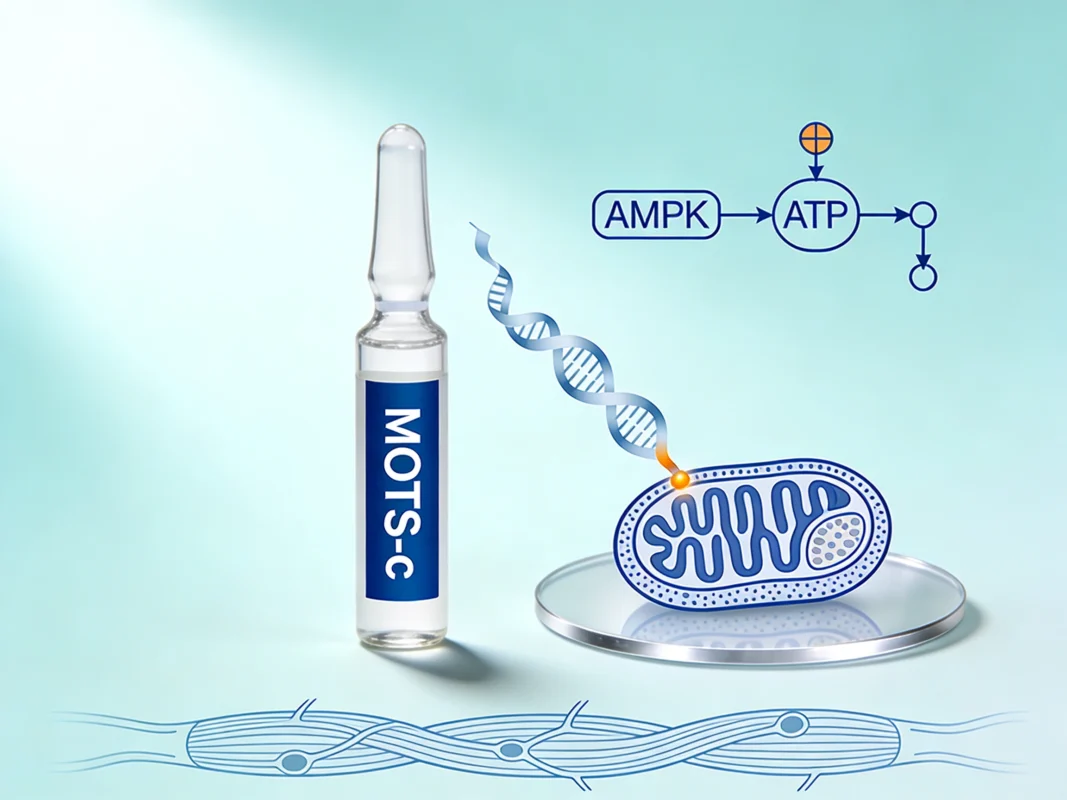
- The mechanism involves AMPK activation in skeletal muscle, folate-methionine cycle modulation, nuclear translocation under metabolic stress, and broader cellular energy regulation.
- Research applications span insulin sensitization, exercise mimetic research, body composition, age-related mitochondrial decline, and broader metabolic aging research domains.
- Endogenous MOTS-c declines with age and rises with exercise, positioning the compound as both biomarker and intervention target in aging and metabolic research.
MOTS-c opens an entirely new territory in the Kinetic Compounds Research Library: mitochondrial-derived peptides. Unlike every other compound covered in the library to date — hypothalamic peptides like CJC-1295 and Sermorelin, pituitary-derived analogs like Tesamorelin, CNS-active compounds like Selank and Semax, healing peptides like BPC-157 and TB-500 — MOTS-c is encoded not in the nuclear genome but in the mitochondrial genome itself, within the 12S ribosomal RNA gene. This fundamental difference in molecular origin places MOTS-c in a distinct research conversation focused on mitochondrial signaling, cellular energy regulation, exercise mimetic biology, and metabolic aging.
This article addresses MOTS-c as a research compound — its discovery and structural origins, the multi-mechanism cellular biology that distinguishes mitochondrial-derived peptides from receptor-canonical compounds, the research applications spanning insulin sensitization through body composition through aging biology, and the reconstitution and sourcing considerations researchers should understand before working with the compound.
What Is MOTS-c?
MOTS-c — short for Mitochondrial Open reading frame of the Twelve S ribosomal RNA type-c — is a 16-amino-acid peptide with the sequence Met-Arg-Trp-Gln-Glu-Met-Gly-Tyr-Ile-Phe-Tyr-Pro-Arg-Lys-Leu-Arg. The molecular weight is approximately 2,174 g/mol.
The compound was discovered and characterized through a research program led by Changhan David Lee and Pinchas Cohen at the University of Southern California Leonard Davis School of Gerontology, with foundational findings published in Cell Metabolism in 2015 [Ref. 1]. The discovery represented a paradigm shift in mitochondrial biology — until the Lee/Cohen work, mitochondria were generally understood as energy-producing organelles whose protein-encoding capacity was limited to a small number of components of the electron transport chain. The identification of MOTS-c as a bioactive peptide encoded within the mitochondrial 12S rRNA gene revealed an entirely new category of mitochondrial-derived peptides with cellular signaling functions extending well beyond classical mitochondrial biology.
The mitochondrial-derived peptide concept has subsequently expanded to include additional compounds (Humanin, SHLP family peptides) encoded within other mitochondrial genome regions, establishing mitochondrial-derived peptides as a distinct class of biological signaling molecules. MOTS-c remains the most extensively characterized member of this class and the one with the broadest research literature base.
MOTS-c has not been approved by FDA, Health Canada, EMA, MHRA, or any other Western regulatory agency for human therapeutic use. The compound is currently in preclinical and early clinical research stages, with growing interest in metabolic disease, aging, and exercise physiology research contexts. Research-grade MOTS-c sold for laboratory research is intended exclusively for that purpose.
Mechanism of Action
MOTS-c’s mechanism is multi-target and fundamentally different from receptor-canonical compounds. Where compounds like GLP-1 receptor agonists act through a defined cell-surface receptor with characterized G-protein coupling, MOTS-c operates through several converging cellular signaling and gene regulation pathways without a single dominant receptor target.
The mechanistic literature converges on several pathways operating in combination.
AMP-activated protein kinase (AMPK) activation. The most-discussed mechanistic finding. MOTS-c activates AMPK signaling in skeletal muscle, liver, and other metabolic tissues [Ref. 2]. AMPK is the master regulator of cellular energy homeostasis — activated when cellular energy charge falls, AMPK phosphorylates downstream targets that increase ATP-generating processes (fatty acid oxidation, glucose uptake) and decrease ATP-consuming processes (protein synthesis, fatty acid synthesis). AMPK activation by exercise is one of the central mechanisms underlying exercise’s metabolic benefits, which is why MOTS-c has been characterized as an “exercise mimetic” — the compound activates the same AMPK pathway that exercise activates.
Folate-methionine cycle modulation. MOTS-c modulates folate-dependent one-carbon metabolism, affecting methionine and S-adenosylmethionine (SAM) levels with downstream effects on protein methylation, DNA methylation, and broader epigenetic regulation [Ref. 1]. This mechanism connects MOTS-c to longer-term gene expression effects beyond acute metabolic signaling.
Glucose uptake and insulin sensitization. MOTS-c increases glucose uptake in skeletal muscle and improves insulin sensitivity in animal models of insulin resistance [Ref. 1, Ref. 2]. The effect appears to operate through AMPK-mediated GLUT4 translocation in muscle tissue — the same mechanism through which exercise improves glucose disposal.
Nuclear translocation and gene regulation. Under metabolic stress conditions, MOTS-c translocates from the cytoplasm to the nucleus where it regulates expression of antioxidant defense genes and metabolic adaptation genes [Ref. 3]. This nuclear function makes MOTS-c one of the few peptides with direct gene-expression-modulating activity at the nuclear level, distinct from peptides that affect gene expression indirectly through receptor signaling.
Anti-inflammatory effects. MOTS-c has documented anti-inflammatory effects across multiple research models, including reductions in pro-inflammatory cytokines and modulation of immune cell function. The anti-inflammatory mechanism contributes to the broader metabolic and aging-related research applications.
Age-related decline. Endogenous MOTS-c levels decline with age across multiple research populations and models [Ref. 3]. The decline is one of the candidate mechanisms underlying age-related mitochondrial dysfunction and metabolic deterioration — and the basis for research interest in MOTS-c supplementation in aging contexts.
Exercise-responsive elevation. Endogenous MOTS-c levels rise in response to acute exercise, with the magnitude of response correlating with exercise intensity [Ref. 4]. This positions MOTS-c as both an exercise-responsive biomarker and a candidate exercise mimetic compound.
The multi-mechanism profile means MOTS-c effects in research models depend significantly on protocol design, tissue context, and metabolic state at the time of administration. The compound operates as a metabolic signaling molecule that integrates multiple pathway effects rather than producing a single dominant downstream effect.
Research Applications
MOTS-c research clusters into several primary domains, with the deepest literature in metabolic and aging research.
Insulin sensitization and glucose metabolism research
The foundational research domain established by the Lee/Cohen 2015 paper [Ref. 1]. MOTS-c administration improves insulin sensitivity and glucose tolerance in mouse models of obesity and insulin resistance. The mechanism involves AMPK-mediated GLUT4 translocation in skeletal muscle, increasing glucose uptake without requiring insulin signaling. Subsequent research has extended these findings across multiple insulin resistance models and has begun examining effects in human research populations [Ref. 5].
Exercise mimetic research
Among the most-discussed application areas. The “exercise mimetic” framing reflects MOTS-c’s activation of AMPK signaling — the same pathway activated by physical exercise — without requiring actual exercise [Ref. 2, Ref. 4]. Research has examined MOTS-c effects on skeletal muscle adaptation, endurance capacity, and exercise tolerance in animal models. The exercise-mimetic research domain has practical research implications for understanding the molecular biology of exercise adaptation and theoretical implications for interventions in populations where exercise is limited.
Body composition and fat metabolism research
MOTS-c research has examined effects on body composition endpoints including fat mass, lean mass, and adiposity in obesity and metabolic syndrome models. The effects are mediated through the combined AMPK-mediated glucose disposal mechanism and direct effects on adipose tissue metabolism. The body composition research is one of the application areas driving broader research interest in MOTS-c as a candidate compound for metabolic conditions.
Aging and longevity research
The age-related decline in endogenous MOTS-c levels [Ref. 3] connects the compound to broader aging research questions. Research has examined MOTS-c supplementation effects in aging mouse models, with endpoints including lifespan, healthspan markers, age-related insulin resistance, and various measures of mitochondrial function. The aging research is one of the most active current areas of MOTS-c investigation.
Exercise physiology and human performance research
Beyond the exercise-mimetic framing, MOTS-c has been studied in the broader context of exercise physiology and athletic performance. Endogenous MOTS-c response to acute and chronic exercise has been characterized across multiple populations, with implications for exercise prescription and recovery research [Ref. 4]. Human performance research in this domain is relatively early-stage but expanding.
Metabolic disease and obesity research
MOTS-c has been studied in obesity, type 2 diabetes, and related metabolic disease research contexts. The combination of insulin sensitization, AMPK activation, and anti-inflammatory effects creates a multi-mechanism rationale for metabolic disease research applications [Ref. 5]. Research grade material for laboratory research in these contexts represents one of the larger application areas in current MOTS-c research.
Comparative mitochondrial peptide research
Researchers studying mitochondrial-derived peptides commonly compare MOTS-c with other compounds in the class. The relevant comparisons include Humanin (a 24-amino-acid peptide encoded within the mitochondrial 16S rRNA region with neuroprotective and metabolic effects) and SHLP family peptides (a series of mitochondrial-derived peptides with various biological activities). MOTS-c remains the most extensively characterized member of the class with the broadest research literature base.
Across all research domains, MOTS-c is intended for laboratory research only in the Kinetic Compounds context. The compound has not been evaluated by FDA, Health Canada, or any other Western regulatory agency for human therapeutic use.
Dosing & Reconstitution for Research
Researchers working with lyophilized MOTS-c reconstitute the compound with bacteriostatic water before use. The reconstitution math follows the standard concentration-equals-mass-divided-by-volume principle covered in our reconstitution tutorial.
A 5 mg vial of MOTS-c reconstituted with 2 mL of bacteriostatic water yields 2.5 mg/mL. A 10 mg vial in 2 mL yields 5 mg/mL. MOTS-c’s molecular weight (~2,174 g/mol) places it in a middle range — substantially larger than the smallest research peptides (Epitalon ~390 Da, Ipamorelin ~711 Da) but smaller than the largest (full Tesamorelin ~5,135 Da, Retatrutide ~4,731 Da).
A consideration specific to MOTS-c: the compound has a relatively short systemic half-life due to peptidase degradation in plasma. Research protocols designed to maintain MOTS-c exposure over extended windows typically use repeated administration or multi-dose protocols rather than single-administration designs. Research grade material is supplied as the lyophilized peptide; the reconstituted solution should be aliquoted for repeated use to minimize freeze-thaw cycling — see our storage and stability guide for aliquoting protocols.
Researchers can verify their concentration math against our peptide reconstitution calculator, which handles the conversion automatically.
This article does not provide dosing guidance for any therapeutic purpose. Research-grade MOTS-c is intended for laboratory research only.
Storage & Handling
Lyophilized MOTS-c is stable at room temperature during shipping but should be moved to long-term storage at -20°C (-4°F), protected from light, on receipt. Under proper lyophilized conditions, the compound remains stable for 24 months or longer.
Once reconstituted, MOTS-c should be stored at 2–8°C and used within 28 days. The general storage principles for research peptides apply directly — see our storage and stability guide for detailed protocols including freeze-thaw considerations and aliquoting strategies.
Every vial should be visually inspected before use. The reconstituted solution should be clear and free of particulates. Cloudiness, discoloration, or visible sediment indicates degradation, and the vial should not be used in research.
For full handling protocols across the broader peptide catalog, see our storage and reconstitution guide.
Sourcing Verified MOTS-c for Research
MOTS-c’s structural simplicity (a contiguous 16-amino-acid sequence with no unusual modifications) makes both HPLC purity verification and mass spectrometry identity confirmation straightforward. The compound’s molecular weight (~2,174 g/mol) is distinctive enough to be clearly distinguished from other research peptides in mass spectrometry analysis.
A credible Certificate of Analysis for MOTS-c should show HPLC purity expressed as a percentage, mass spectrometry confirmation matching ~2,174 Da, and a clear distinction between peptide content and peptide mass. The principles of reading a research peptide COA are covered in detail in our reading a Certificate of Analysis article, and our specific third-party testing methodology is documented in our Janoshik Analytical methodology article.
Kinetic Compounds tests every batch of MOTS-c through Janoshik Analytical, an independent third-party laboratory. Current batch reports are published on the MOTS-c product page. Our broader testing methodology is documented on our lab testing and COA page.
For researchers working across the broader metabolic research peptide space, Semaglutide, Tirzepatide, and Retatrutide operate through different mechanisms (GLP-1 receptor agonism vs mitochondrial-derived signaling) but address overlapping research domains. The full research peptide catalog is available through our shop.
Researching mitochondrial signaling, AMPK pathway, exercise mimetic biology, or metabolic aging? Our complete research peptide catalog covers MOTS-c and related research compounds — all independently lab-tested with current Certificates of Analysis available on each product page.
Related Peptides
Related peptides will load here via PHP snippet.
Available for Research
Research Tools
Quality Promise
very batch independently tested by Janoshik Analytical. 98% purity minimum.
Frequently Asked Questions
What is MOTS-c?
<p>MOTS-c (Mitochondrial Open reading frame of the Twelve S rRNA type-c) is a 16-amino-acid peptide encoded within the mitochondrial 12S rRNA gene. It is a mitochondrial-derived peptide — a distinct class of biological signaling molecules encoded in the mitochondrial genome rather than the nuclear genome. The compound was discovered by Changhan David Lee and Pinchas Cohen at the University of Southern California, with foundational findings published in Cell Metabolism in 2015.</p>
How is MOTS-c different from other research peptides?
<p>MOTS-c is fundamentally different from other research peptides in molecular origin: it is encoded within the mitochondrial genome rather than the nuclear genome, and it operates through cellular signaling and gene regulation mechanisms rather than through receptor agonism. This places MOTS-c in a distinct research conversation focused on mitochondrial biology, cellular energy regulation, and metabolic signaling — separate from receptor-canonical compounds like GLP-1 receptor agonists or multi-target CNS peptides.</p>
What does the "exercise mimetic" framing mean for MOTS-c?
<p>MOTS-c activates AMP-activated protein kinase (AMPK) signaling — the same cellular energy pathway activated by physical exercise. Exercise's metabolic benefits operate substantially through AMPK activation, so a compound that activates AMPK directly has been characterized as "mimicking" some of exercise's metabolic effects. The framing is mechanistic shorthand rather than a claim that MOTS-c replaces exercise — actual exercise produces many additional effects beyond AMPK activation that no single compound replicates.</p>
Why does endogenous MOTS-c decline with age?
<p>The mechanism of age-related MOTS-c decline is not yet fully characterized. Mitochondrial function broadly declines with age across multiple measures, and reduced expression of mitochondrial-encoded proteins (including MOTS-c) is consistent with the broader pattern. The decline is one of the candidate mechanisms underlying age-related metabolic deterioration and is a focus of ongoing aging research.</p>
Is MOTS-c approved as a medication?
<p>No. MOTS-c has not been approved by FDA, Health Canada, EMA, MHRA, or any other Western regulatory agency. The compound is currently in preclinical and early clinical research stages. Research-grade MOTS-c sold for laboratory research is intended for laboratory research only.</p>
How is MOTS-c reconstituted for research?
<p>Lyophilized MOTS-c is reconstituted with bacteriostatic water. A 5 mg vial in 2 mL yields 2.5 mg/mL. Standard peptide reconstitution technique applies — inject bacteriostatic water down the inner wall of the vial, swirl gently. Researchers can verify calculations using our reconstitution calculator.</p>
Is research-grade MOTS-c legal in Canada?
<p>Research-grade MOTS-c is legal to purchase and possess in Canada for laboratory research purposes only. The compound is not approved by Health Canada for human therapeutic use.</p>
References
- "The mitochondrial-derived peptide MOTS-c promotes metabolic homeostasis and reduces obesity and insulin resistance." Cell Metabolism, 21(3):443-454. — Lee C, Zeng J, Drew BG, Sallam T, Martin-Montalvo A, Wan J, Kim SJ, Mehta H, Hevener AL, de Cabo R, Cohen P (2015).
- "MOTS-c: A novel mitochondrial-derived peptide regulating muscle and fat metabolism." Free Radical Biology and Medicine, 100:182-187. — Lee C, Kim KH, Cohen P (2016).
- "The Mitochondrial-Encoded Peptide MOTS-c Translocates to the Nucleus to Regulate Nuclear Gene Expression in Response to Metabolic Stress." Cell Metabolism, 28(3):516-524. — Kim KH, Son JM, Benayoun BA, Lee C (2018).
- "MOTS-c is an exercise-induced mitochondrial-encoded regulator of age-dependent physical decline and muscle homeostasis." Nature Communications, 12(1):470. — Reynolds JC, Lai RW, Woodhead JST, Joly JH, Mitchell CJ, Cameron-Smith D, Lu R, Cohen P, Graham NA, Benayoun BA, Merry TL, Lee C (2021).
- "Plasma mitochondrial derived peptides MOTS-c and SHLP2 positively associate with android and liver fat in people without diabetes." Biochimica et Biophysica Acta General Subjects, 1865(11):129991. — Sequeira IR, Woodhead JST, Chan A, D'Souza RF, Wan J, Hollingsworth KG, Plank LD, Cohen P, Poppitt S
Continue Reading
For Research Use Only Products described on this site are intended for laboratory research purposes only. They are not approved by Health Canada for human consumption, diagnosis, treatment, or prevention of any medical condition.